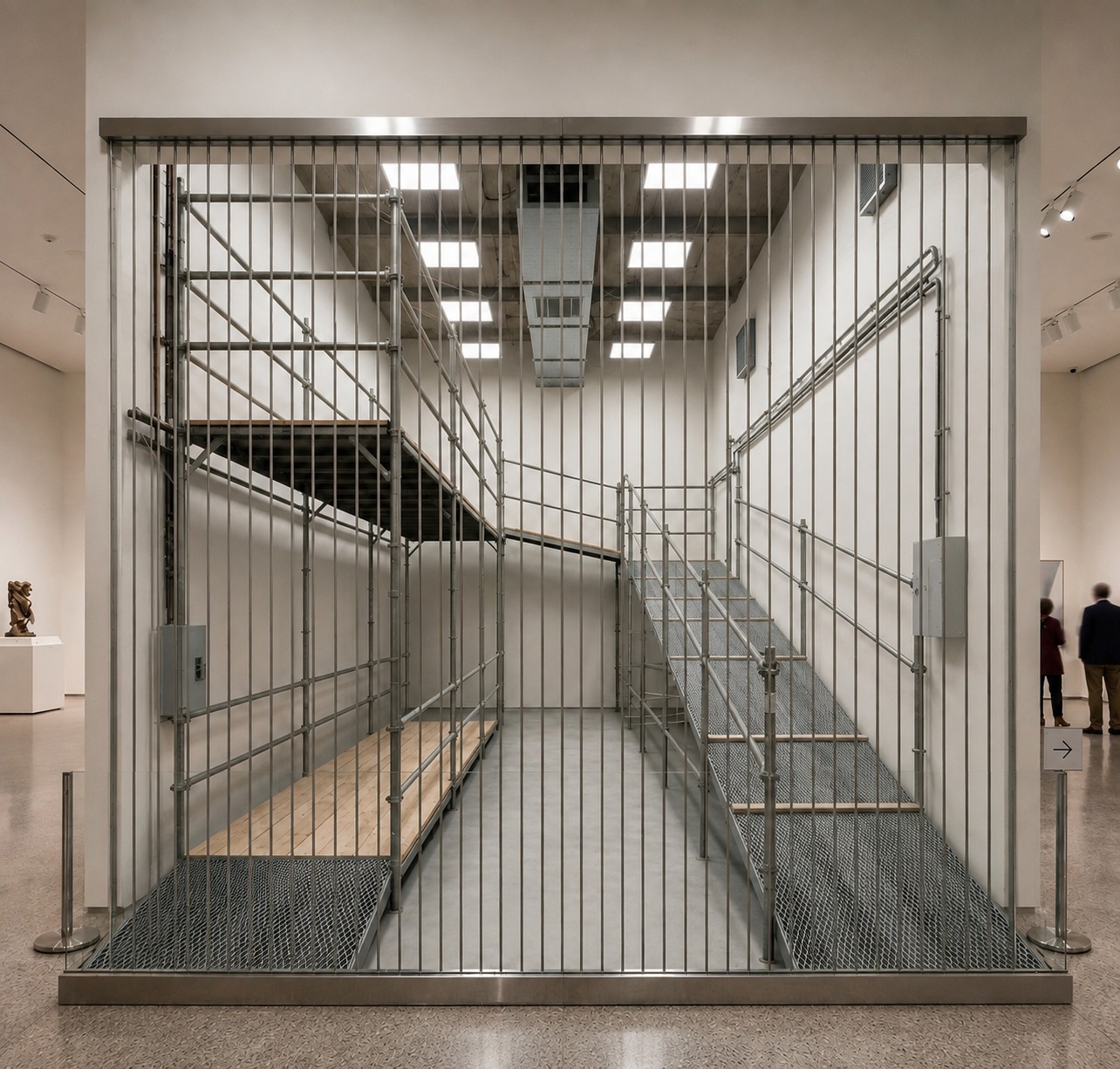
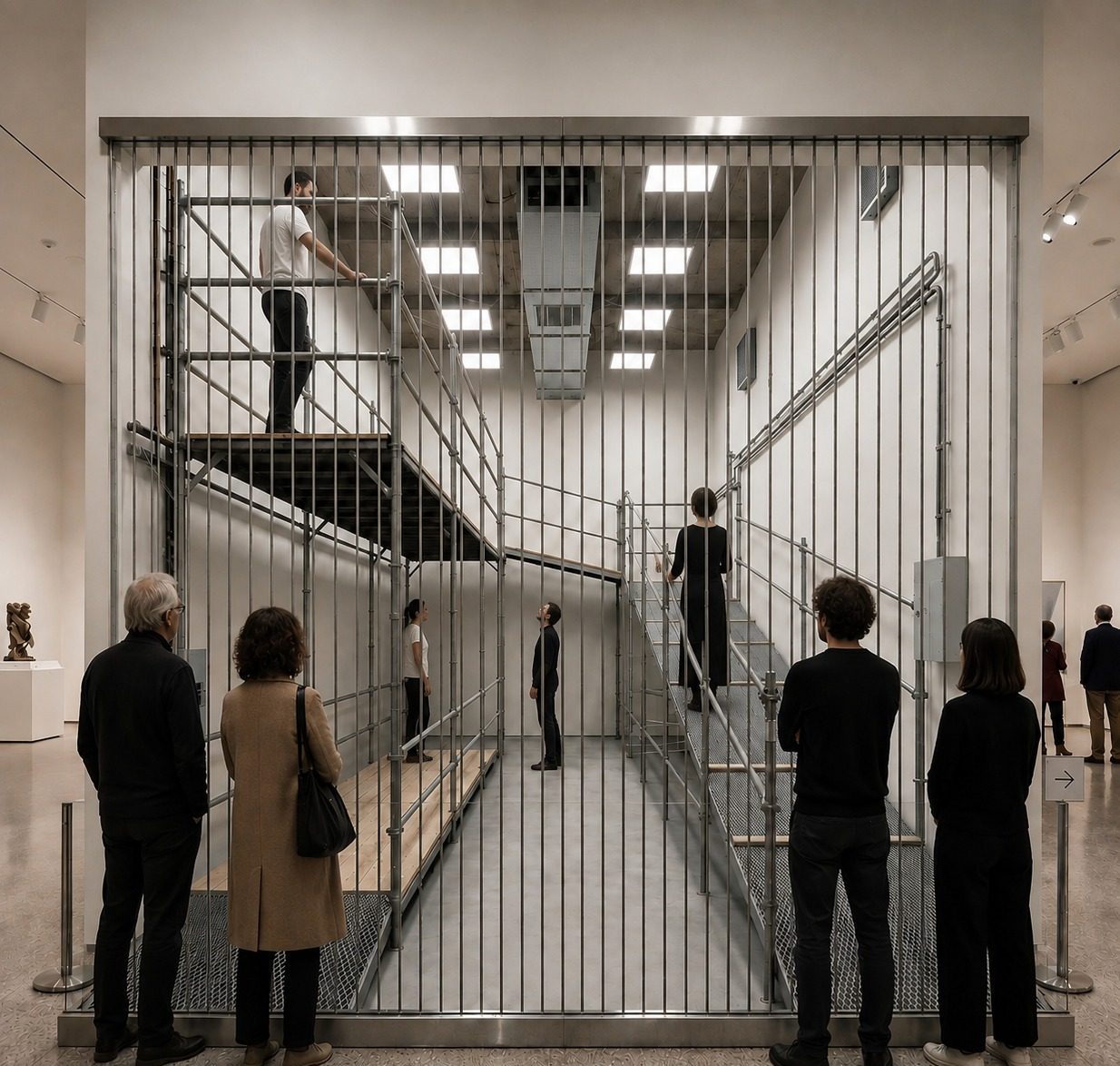
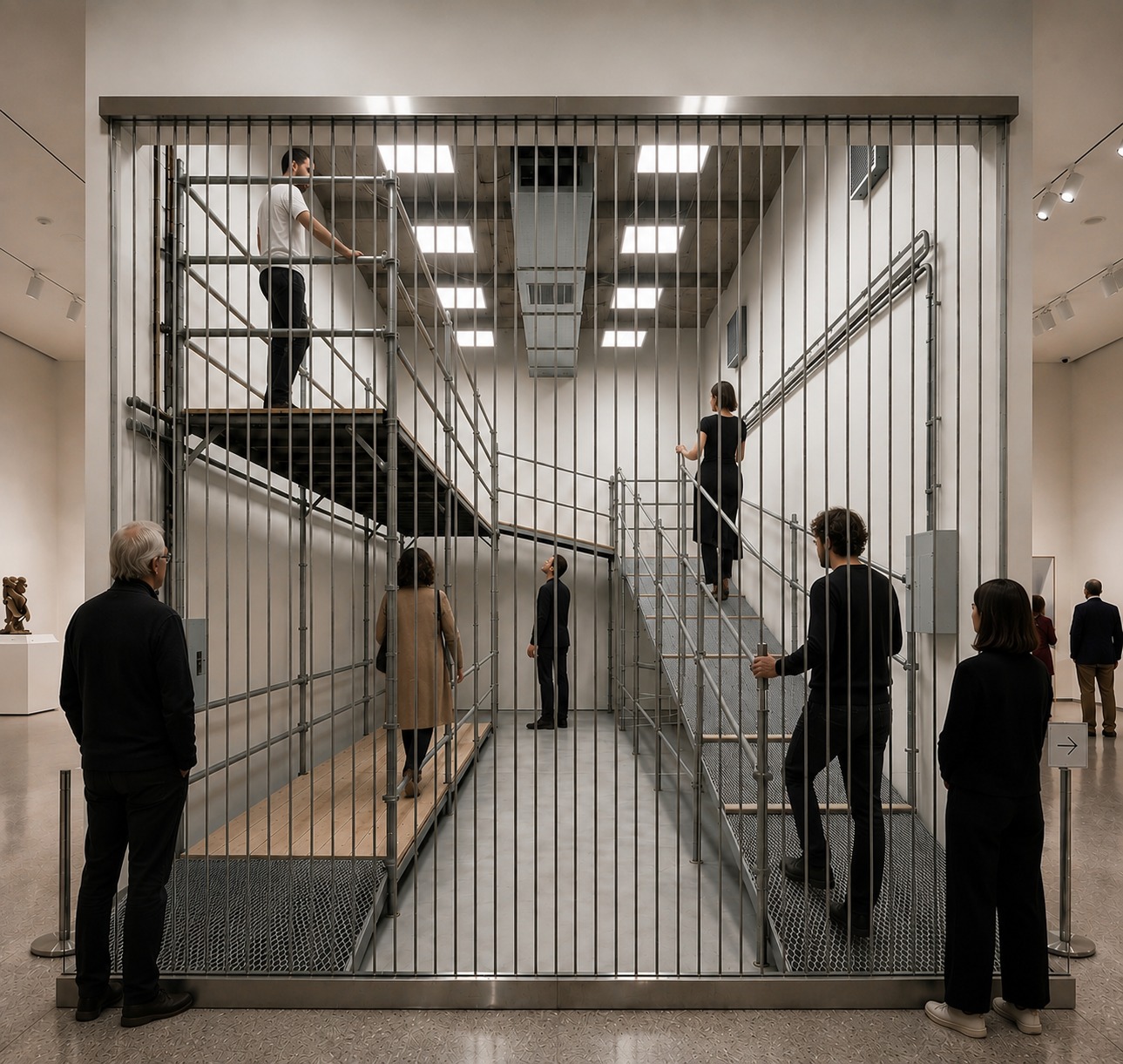
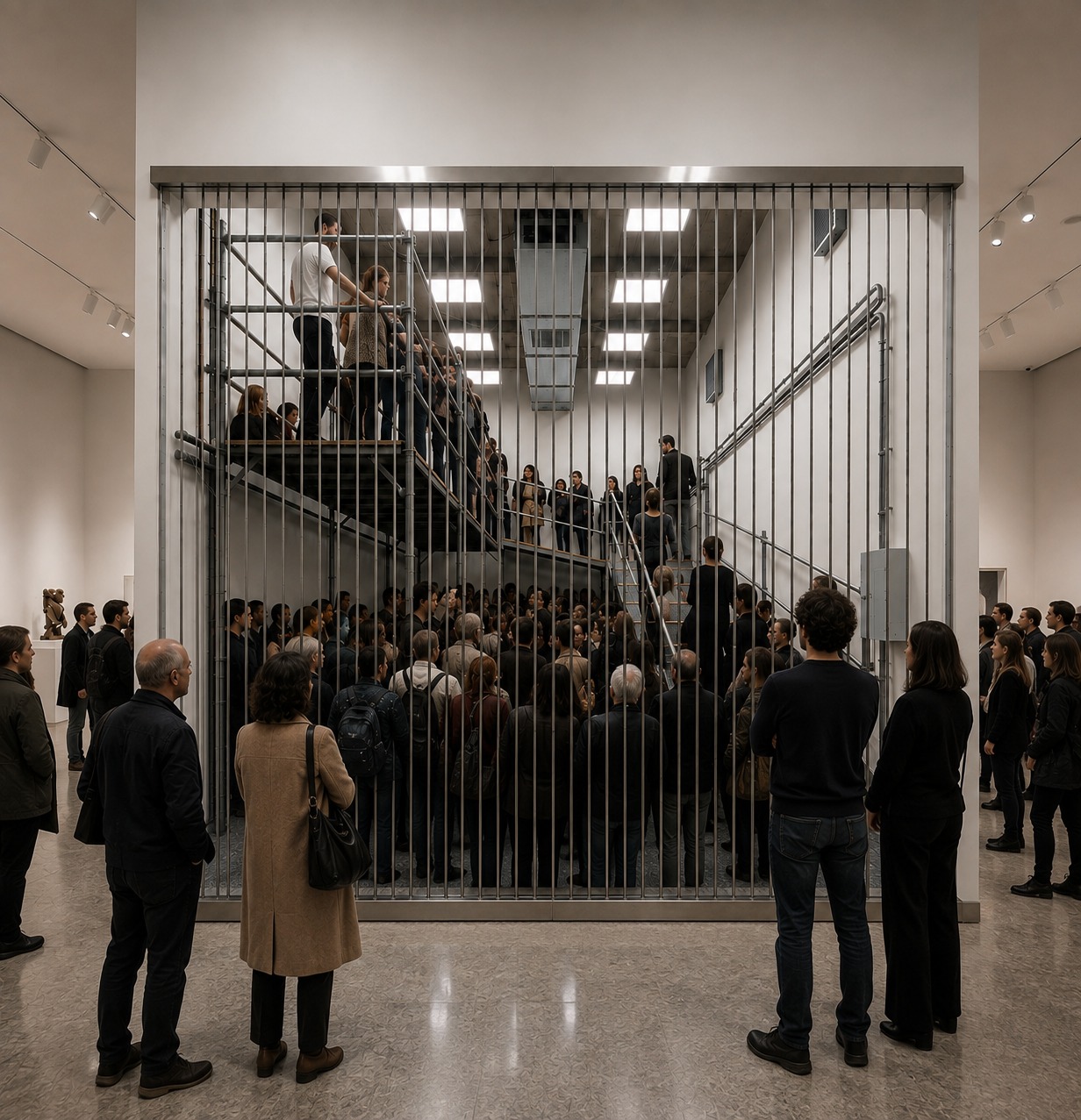
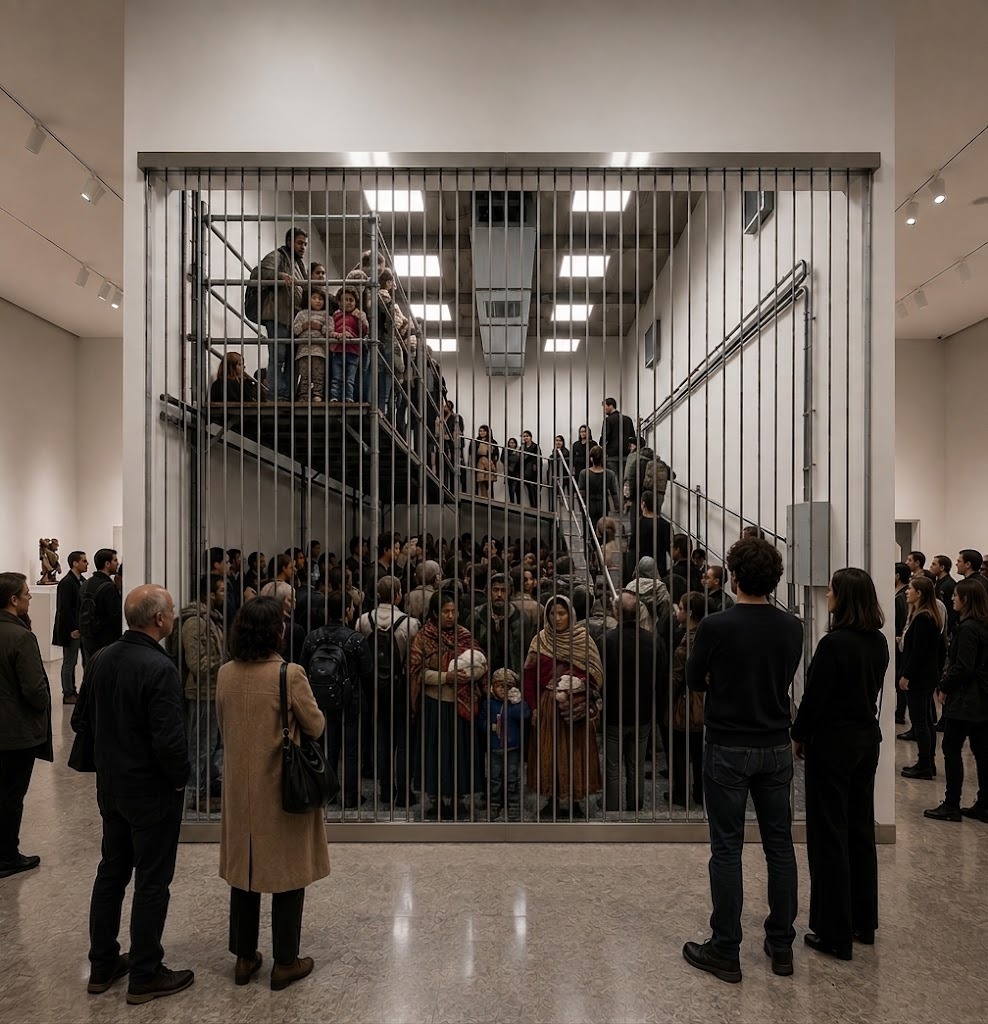
“Mechanisms of Transition”Materials: Industrial steel scaffolding (pipes and couplers), galvanized steel grating, plywood panels, raw exposed concrete structure (Site-specific), electrical control boxes, square LED light fixtures, and aluminum ventilation ducts.Dimensions: Site-specific installation. Approximate dimensions: Height 4.5m, Width 6m, Depth 12m (adaptable to the gallery or venue dimensions).
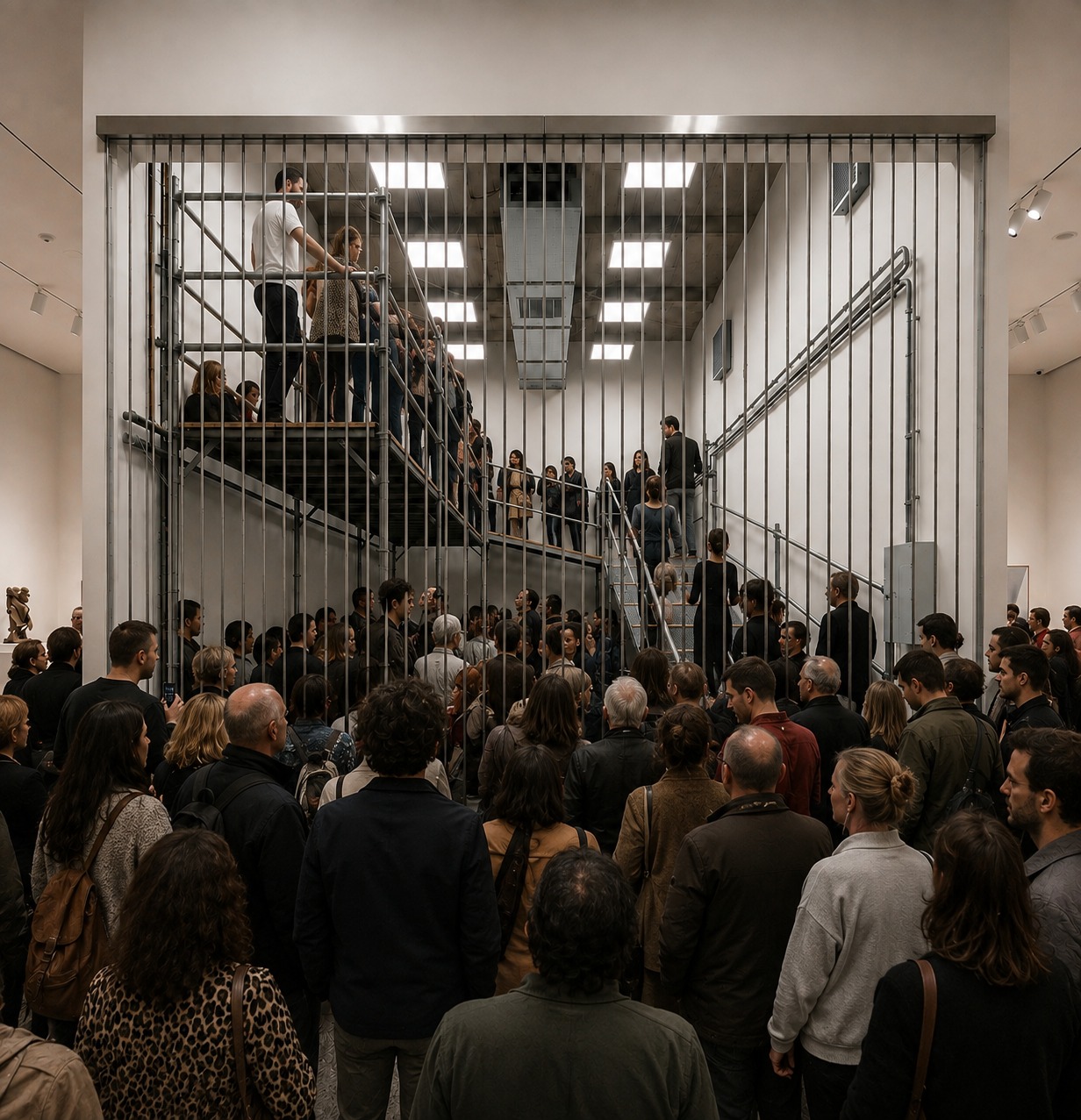
Mechanisms of Transition/Architecture of Suspended Animation The site-specific installation “Mechanisms of Transition” transforms the monolithic, concrete exhibition space into a physical and psychological exploration of liminality the spaces in between. Through the deliberate use of elements structural to construction sites cold steel scaffolding, metal gratings, and temporary wooden planks the artwork appropriates the aesthetics of a “work in progress” and transplants it into the heart of the artistic institution. The installation presents two parallel systems of bodily transit: to the right, a steep, grated ramp ascending upwards; to the left, a dual-level walkway supported by a traditional scaffolding skeleton. This temporary architecture does not lead to a functional destination or an exit; it exists purely for the sake of movement. It forces a calculated pace upon the viewers, where each step on the echoing metal mesh amplifies the vulnerability of the body against the massive, fortified, and industrial structure enclosing it. At its core, “Mechanisms of Transition” explores the friction between the permanent and the transient. The raw concrete, symbolizing long-term architectural stability, is intersected and challenged by the scaffolding an element inherently designed to be dismantled and forgotten. The flush, square LED fixtures on the ceiling flood the space with a uniform, almost clinical light, neutralizing any sense of external time. The installation invites the viewer to occupy the building’s interim state, reflecting on the institutional, economic, and physical systems that channel our movement through modern public space.